
Cold chain compliance is not created by one box, one pallet cover or one temperature logger. It comes from a wider system of product requirements, storage and transport conditions, documented processes, monitoring, traceability and evidence that the approach being used is appropriate for the product and the journey.
For organisations shipping across the United States and Europe, another point matters just as much. Cold chain compliance is not governed by one universal framework. The principles around product quality and suitable storage and transport conditions are familiar across markets, but the regulatory language and obligations differ by jurisdiction.
Cold chain compliance meaning in practice
Cold chain compliance means managing temperature-sensitive pharmaceutical products in line with their defined storage and transport requirements and the regulatory, quality and distribution obligations that apply to the product and market.
In practice, that can involve appropriate conditions, documented procedures, monitoring, traceability and evidence that the systems used are suitable for their intended purpose.
That definition needs a qualification. Not every temperature-sensitive pharmaceutical product travels under refrigerated conditions, and not every market describes distribution requirements in the same way. Some products move through a traditional cold chain, while others are managed within controlled room temperature ranges. The product specification and applicable market requirements should lead the process.
Why does cold chain compliance matter for pharmaceutical products?
Pharmaceutical products need to be stored, handled and transported under conditions appropriate to their specifications. For temperature-sensitive products, that puts particular emphasis on understanding the required conditions and maintaining suitable processes as the shipment moves through the supply chain.
The compliance picture can include temperature requirements, storage, transport, handling, monitoring, documentation, traceability and the way deviations are assessed.
These are connected controls rather than isolated tasks. A temperature logger can show what happened, for example, but it does not prevent exposure. A thermal cover can help reduce the effect of external conditions, but it does not make the wider shipment compliant on its own.
What are the key cold chain requirements?
Start with the product requirements
The exact cold chain requirements will depend on the product and the market it is moving through. The starting point should always be the product information, specification or authorised requirements that define how it needs to be stored and transported.
Being a pharmaceutical product does not automatically mean the same conditions apply as another medicine. The requirements need to be specific to the product.
Maintain suitable storage and transport conditions
Those conditions then need to be maintained through storage and distribution. In the UK, MHRA GDP guidance states that medicines should be stored, transported and handled under suitable conditions in line with their marketing authorisation or product specification.
The European Commission GDP guidelines take a similar view, with a strong focus on protecting the quality and integrity of medicinal products as they move through the distribution chain.
The United States uses different regulatory language. FDA current Good Manufacturing Practice requirements include appropriate storage conditions for drug products, along with written procedures for warehousing and distribution.
For companies operating across more than one market, that distinction matters. US requirements should be considered in their own regulatory context rather than treated as an extension of EU GDP.
Use monitoring to see what happened during the journey
Temperature monitoring gives you a record of the conditions the shipment actually experienced. Depending on the product and the process, it may be used during storage, transport or route qualification. That information becomes particularly important if the shipment moves outside the expected range, because it gives the quality team something concrete to assess rather than relying on assumptions about what may have happened.
Keep clear records
A well-managed cold chain needs a clear record of what happened. The exact documentation will vary between organisations and regulatory frameworks, but it may include transport records, temperature data, handling information, route details, qualification evidence and records of any deviations or investigations. The purpose is simple: there should be a traceable account of how the shipment was handled and what conditions it experienced.
Qualify and validate where required
Qualification and validation are related terms, but they are not interchangeable with a general product claim. A thermal solution may have supporting test data, and a customer may qualify a specific configuration for a particular route or application. That does not mean the same configuration is automatically validated for every product, journey or climate.
International WHO guidance for time and temperature-sensitive pharmaceutical products discusses route profiling and shipping-system qualification as part of the wider distribution process. It also makes clear that local legislation and regulations take precedence. In practice, the qualification needs to reflect how the shipment will actually be used. The route, configuration, product requirements and expected conditions all matter.
Which regulations and cold chain standards may apply?
Because cold chain regulations differ between markets, the applicable framework depends on the product, destination, route and organisations involved. France, Germany, Belgium and Denmark sit within the EU pharmaceutical distribution framework, while the UK operates under MHRA oversight and the United States has its own FDA requirements. International guidance may provide useful context, but it does not replace local law or product-specific obligations.
The principles behind cold chain regulatory compliance can be explained at a high level, but the exact obligations depend on the product, market and route. Specific temperature requirements, formal standards and legal obligations should always be checked against the current authoritative source that applies.
Where can compliance risk appear during the journey?
Compliance considerations can appear wherever the product changes environment, location or handler. Storage and dispatch are obvious points, but airports, temporary holding areas, cross-docking facilities, customs delays, transfers between logistics providers and final delivery can all change the conditions surrounding a shipment.
At these points, the compliance question goes beyond exposure alone. Teams also need to understand what procedures, records, controls and evidence apply when the shipment changes environment or responsibility.
What happens when a temperature excursion occurs?
A temperature excursion occurs when a product experiences conditions outside the defined temperature parameters for its storage or transport process. The response depends on the product, the extent and duration of the excursion, the available stability information and the organisation’s quality procedures.
An excursion should not automatically be treated as proof that a product is unusable, and it should not be ignored. The event may need to be documented, the temperature data reviewed and the product assessed against the information and procedures that apply. Wilpak has separate guidance on temperature excursions for a more detailed discussion.
How thermal protection can support a compliance strategy
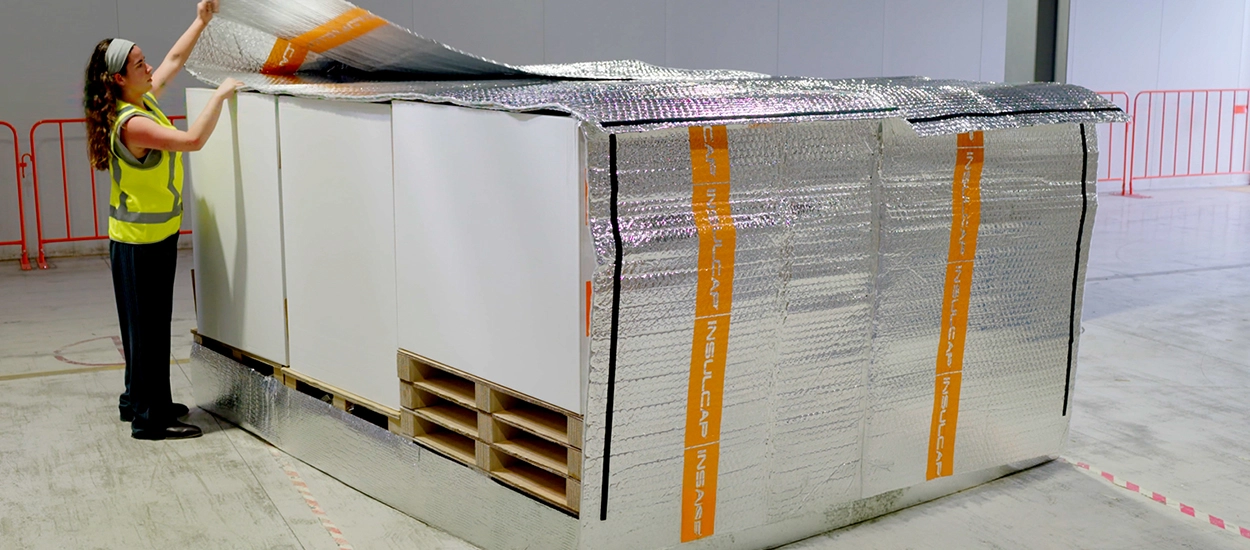
Thermal protection can support a wider temperature-control strategy by helping reduce the effect of external conditions on the shipment. For palletised freight, InsulCap® creates a passive thermal barrier around the load. For suitable box-level configurations, InsulBox® provides a custom thermal protection liner.
Using either product does not make a shipment compliant. Compliance depends on the product, process, applicable regulations, route, monitoring, documentation and the other controls used by the organisations in the supply chain. Passive thermal protection may support the wider temperature-control strategy where it is appropriate for the application.
Wilpak has undertaken route-based qualification trials using calibrated temperature loggers. Those trials show how a defined configuration performed under defined test conditions. They do not guarantee identical performance across every product, route or climate.
A stronger cold chain compliance strategy starts with the whole system
A useful compliance review brings the pieces together. The organisation needs to understand the product requirements, identify the regulatory framework that applies, map the route, recognise points where temperature conditions may change, choose suitable transport and protection, establish the required monitoring and records, and define how deviations will be handled. Qualification or validation should be completed where the application requires it.
No single product performs all of those jobs. Each control has a specific role within the wider compliance system.

Supporting temperature-sensitive pharmaceutical shipments
Wilpak Group International’s expertise sits within thermal protection and temperature-sensitive transport. The team works with pharmaceutical and logistics organisations to understand shipment configurations, routes and potential exposure, then develop passive thermal protection around those requirements.
Regulatory compliance remains the responsibility of the organisations operating within the relevant pharmaceutical supply chain. If you are reviewing the thermal-protection element of a route, speak with Wilpak about the conditions your shipment may encounter and the evidence available for the proposed configuration.
Frequently asked questions
What is cold chain compliance?
Cold chain compliance involves storing, handling and transporting temperature-sensitive products in line with their defined conditions and the regulatory, quality and distribution requirements that apply to the product and market.
What are the requirements for cold chain compliance?
The requirements vary by product and jurisdiction. Common considerations include suitable storage and transport conditions, monitoring, documentation, traceability, procedures and evidence that the systems being used are appropriate for their intended purpose.
What is GDP in pharmaceutical distribution?
Good Distribution Practice is a quality framework used in pharmaceutical distribution. It covers areas such as storage, handling, transport, quality systems and documentation. The precise legal framework differs by jurisdiction, so GDP terminology should not be treated as identical across every market.
Can thermal packaging make a pharmaceutical shipment compliant?
No. Thermal protection can support a wider temperature-control strategy, but compliance depends on the product, process, applicable requirements, monitoring, documentation and other controls used throughout the supply chain.