
A temperature-sensitive medicine can pass through several organisations, facilities and transport environments before it reaches its destination. The product requirements do not change just because the shipment changes hands, but the conditions around it often do.
That is why the pharmaceutical supply chain needs to be considered as one connected journey. For temperature-sensitive products, the risk is rarely confined to the time spent inside a truck or aircraft. It can appear at the transitions between storage, loading, transport, handling and final delivery.
What is the pharmaceutical supply chain?
The pharmaceutical supply chain is the network of organisations, facilities, processes and transport stages involved in moving medicines from production through storage and distribution to their final destination. It can include manufacturers, warehouses, freight forwarders, carriers, airports, distribution centres and receiving organisations.
Within the supply chain in pharmaceutical industry operations, responsibility can move between several organisations before the product reaches its destination.
For temperature-sensitive products, pharmaceutical supply chain management also needs to account for the conditions surrounding the shipment as it moves between those stages. That includes understanding where freight leaves a controlled environment, how long a transfer may take and what external conditions could affect it.
Why are temperature-sensitive products more complex to manage?
Temperature-sensitive products have defined storage and transport requirements that need to be respected throughout the journey. Some pharmaceutical products require refrigerated conditions, while others move within controlled room temperature ranges. The relevant range depends on the individual product and its approved or specified requirements.
The complexity comes from the fact that the surrounding environment is not static. A shipment might leave controlled storage, cross a warm loading dock, travel by road, wait at an airport, fly through a different climate, pass through another logistics centre and then continue by road again. Every transition changes the context around the freight.
Where can temperature risk occur across the pharmaceutical supply chain?
Storage and warehousing
A product may be stored under controlled conditions right up until it is picked for dispatch. From there, things can change quickly. Freight may sit in a staging area, wait for collection or move through parts of the warehouse that are not controlled in the same way. That time outside the main storage environment is part of the journey too, and it needs to be accounted for.
Loading and dispatch
Loading can expose freight to conditions it has not experienced inside the warehouse. Doors are open, pallets are moved, vehicles are being loaded and the outside temperature suddenly matters. How much that affects the shipment depends on where it is, how long loading takes and what protection is already in place.
Road and air transport
The transport leg itself is only one part of the picture. A road journey may involve stops, traffic or changes in outside temperature. Air freight can include ground handling, time on the tarmac and transfers between facilities before and after the flight. Looking at the full journey gives a much clearer view of pharma supply chain risk than looking at scheduled travel time alone.
Transport hubs and transfer points
Airports, freight terminals and cross-docking facilities can be difficult to predict because several things may change at once. The shipment may be unloaded, moved to another area, handed to a different team or held while the next stage is organised. Sometimes those waits are short. Sometimes they are not. These transfer points are worth paying close attention to because they can introduce conditions that are very different from the controlled stages on either side.
Final delivery
Arrival does not necessarily mean the temperature-sensitive part of the journey is finished. The product still needs to move from the vehicle or aircraft into the receiving environment. Until that handover is complete, the shipment may still be exposed to outside conditions or delays. Protection needs to stay relevant right through to that final controlled point.
Why handover points deserve more attention
Handover points are important because responsibility and environmental conditions can change at the same time. A manufacturer hands a shipment to a freight forwarder, the forwarder transfers it to a carrier, a ground handler moves it through an airport, and another provider takes over at the destination. Each transition may involve different processes, timing and exposure.
This does not mean every handover creates a temperature excursion. It means each handover should be visible within the pharmaceutical supply chain strategy. Teams should understand what happens to the shipment at that point, how long it is expected to remain there and what protection is in place if conditions change.

Managing temperature-sensitive products across the whole route
Understand the product first
The product requirements should lead every decision. Before discussing packaging, transport mode or thermal protection, the organisation responsible for the shipment needs to understand the conditions the product requires and any handling limitations that apply.
Map the entire journey
A useful route assessment follows the shipment from preparation and dispatch through every transport leg, transfer, storage point and final delivery. This makes it easier to identify stages where the freight may leave a controlled environment or experience conditions that differ from the plan.
Plan for the journey that may happen, not only the one scheduled
Weather, congestion, customs processes, missed connections and operational delays can all change the route. A resilient pharma supply chain strategy allows for realistic variability instead of relying on the best-case timetable.
Select thermal protection where it adds value
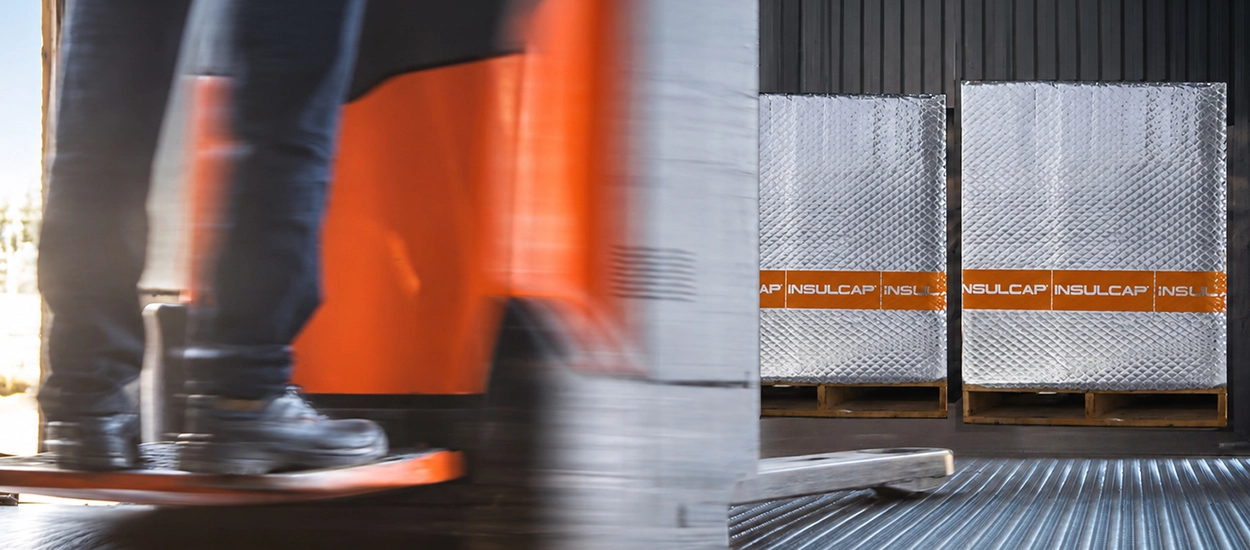
Passive thermal protection can support a wider temperature-control strategy during stages where freight is exposed to external conditions. For palletised loads, InsulCap® creates a thermal barrier around the pallet. For suitable box-level configurations, InsulBox® provides a custom thermal protection liner.
These solutions do not manage the entire pharmaceutical supply chain. Their role is specific: to help reduce the effect of external thermal conditions on the protected shipment where passive protection is appropriate.
Qualification should reflect the route
Route-specific evidence matters because a thermal protection result only makes sense in the context in which it was tested.
Route-specific evidence matters because a thermal protection result only makes sense in the context in which it was tested. Wilpak has published qualification work that simulated a 77-hour Melbourne to Hong Kong to Chicago air-freight profile, including external conditions ranging from cold to hot environments. The trial demonstrates the value of assessing a defined route and exposure profile rather than assuming that one result applies universally.
That distinction is important for any pharmaceutical supply chain strategy. A product may remain the same while the route, climate, duration, freight configuration or handling process changes. When those factors change, the protection plan may need to be reviewed as well.
Building a more resilient pharmaceutical supply chain
Resilience starts with visibility. Organisations need to understand the journey, identify where exposure can occur and make practical decisions around transport, handling, monitoring and protection. The strongest approach is one that can be reviewed when routes change, rather than treated as a fixed setup that never needs another look.
For temperature-sensitive freight, that means connecting the operational details. Product requirements, handover points, seasonal conditions, transport modes and expected delays all influence the route. Thermal protection can then be selected where it supports that wider plan.
Protecting temperature-sensitive products throughout the journey
A cold room cannot protect a shipment once it has left the warehouse, and a controlled aircraft environment cannot manage what happens on the loading dock. No single component owns the whole journey. Each part of the supply chain has a role.
Wilpak works within that wider system, helping pharmaceutical and logistics organisations understand thermal exposure and select passive protection for different shipment configurations. If you are reviewing an existing route or planning a new one, speak with the Wilpak team about where your freight changes hands and where the surrounding conditions change with it.
Frequently asked questions
What is the pharmaceutical supply chain?
It is the network of organisations, facilities, processes and transport stages used to move pharmaceutical products from manufacture through storage and distribution to their destination.
What are the main risks for temperature-sensitive products in the pharmaceutical supply chain?
The main considerations include changing environmental conditions, delays, storage, handling, handover points, transport conditions and periods where freight moves outside controlled environments.
How can temperature-sensitive pharmaceutical products be protected during transport?
The appropriate approach depends on the product, route and shipment configuration. It may combine controlled storage or transport, monitoring, operational procedures and suitable passive or active thermal-protection systems.