
Published by Wilpak Group International • Thermal Pallet Cover & Pallet Insulation Specialists
Pallet blankets and thermal pallet covers both insulate palletised goods during transport — but they are not the same thing. A pallet blanket is a basic insulating wrap. A thermal pallet cover is a multi-layer, engineered solution validated to measurable performance standards. The difference matters when the cost of getting it wrong is a compromised shipment.
If you have been researching thermal protection for palletised goods, you have almost certainly encountered both terms — sometimes used interchangeably, sometimes as if they describe entirely different product categories. The reality sits somewhere in between, and understanding the distinction is the first step to choosing the right solution for your supply chain.
What Is a Pallet Blanket?
A pallet blanket — also called a thermal blanket for pallets, an insulated pallet blanket, or a pallet insulation blanket — is a flexible insulating cover designed to be draped or wrapped around a pallet of goods to provide a degree of temperature protection during transit.
Traditional pallet blankets typically use relatively simple construction: a reflective outer layer, a layer of bubble wrap or foam insulation, and sometimes a second reflective inner layer. They are widely available, relatively low cost, and provide meaningful improvement over no thermal protection at all.
For short transit legs, ambient temperature conditions, and lower-risk cargo, a basic insulated pallet blanket can be entirely adequate. The challenge arises when supply chain conditions become more demanding — extended transit times, extreme ambient temperatures, air freight tarmac exposure, or highly regulated cargo like pharmaceuticals — and a basic pallet blanket is expected to perform like an engineered thermal pallet cover.
What Is a Thermal Pallet Cover?
A thermal pallet cover is an engineered thermal protection solution designed to address all three heat transfer mechanisms — radiation, conduction, and convection — simultaneously and in a validated, repeatable way.
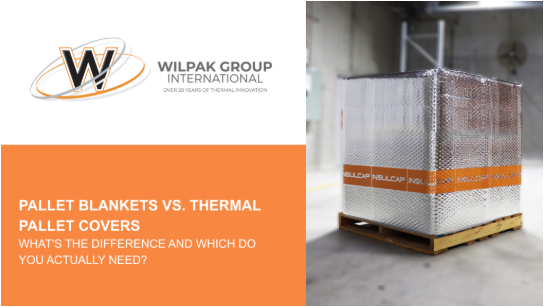
Where a pallet blanket might use two or three layers of material selected primarily for cost, a thermal pallet cover like InsulCap® uses seven specifically engineered layers — each performing a defined function in the overall thermal barrier system. The outer layers reflect radiant heat before it can penetrate to the product. Insulating mid-layers interrupt conductive heat transfer. An enclosed air gap within the construction reduces convective exchange. The result is a system where each layer compounds the performance of the others.
The other critical distinction is validation. A thermal pallet cover is tested — against ASTM standards, under real-world shipping conditions, across the range of ambient temperatures and transit durations it will actually encounter. That testing produces documented performance data that procurement teams, quality assurance managers, and regulatory bodies can rely on.
A pallet blanket typically does not come with that evidence base.
The Key Differences Side by Side
Construction A pallet blanket uses basic layered construction — typically reflective film and bubble or foam insulation. A thermal pallet cover uses multi-layer engineered construction, with each layer designed to address a specific heat transfer mechanism.
Performance validation Pallet blankets are rarely validated to independent performance standards. Thermal pallet covers like InsulCap® are tested to ASTM standards and validated against real-world shipping scenarios, with documented results.
Specification compliance Basic pallet blankets do not meet military or regulatory specifications. InsulCap® thermal pallet covers meet US Military and UK MOD specifications — the most demanding material performance benchmarks available.
Air freight suitability Standard pallet blankets are not designed for the specific conditions of air freight — tarmac radiant heat exposure, cabin pressure changes, and extended loading delays. InsulCap® is the only thermal pallet cover specifically engineered and validated for air freight environments.
Regulatory suitability For GDP-compliant pharmaceutical cold chains, documented validation is a requirement, not a preference. A thermal pallet cover with ASTM test data and shipping trial documentation meets that requirement. A basic pallet blanket typically does not.
Reusability and durability Basic pallet blankets vary widely in durability. Military-specification thermal pallet covers are built for repeated use, maintaining performance across multiple deployments.
Custom sizing InsulCap® thermal pallet covers can be custom-sized to fit non-standard pallet configurations, ensuring full coverage without gaps or folds that create thermal bridges.
Which Do You Actually Need?
The honest answer depends on what you are shipping, how you are shipping it, and what the consequences of a thermal failure look like for your business.
A basic insulated pallet blanket may be adequate if:
- Your transit times are short and predominantly road-based
- Your cargo operates within a wide, forgiving temperature range
- Your ambient conditions are moderate and predictable
- The financial and reputational consequences of a thermal excursion are limited
An engineered thermal pallet cover is the right choice if:
- You are shipping via air freight with tarmac exposure
- Your cargo is temperature-sensitive pharmaceutical, biotech, or high-value perishable product
- Your supply chain operates across multiple climate zones or transit modes
- Your organisation operates under GDP, GMP, or other regulatory frameworks requiring documented thermal validation
- Transit times are extended or subject to unpredictable delays
- The consequences of a thermal failure include regulatory investigation, batch disposal, or significant reputational risk
For most organisations operating in regulated industries or moving high-value temperature-sensitive goods internationally, the performance gap between a basic pallet blanket and a validated thermal pallet cover is not a minor specification difference — it is the gap between a supply chain that holds up under pressure and one that doesn’t.
The question is not whether a thermal pallet cover costs more than a pallet blanket. The question is whether the cost of a thermal failure exceeds the cost of getting the protection right.
InsulCap® — Where the Science of Thermal Protection Meets Real-World Conditions
InsulCap® is Wilpak Group International’s thermal pallet cover solution, built to US Military and UK MOD specifications and validated across the full range of conditions that global cold chain logistics actually produces.
Available in three configurations — InsulPlatinum®, InsulGold®, and InsulPrime® — InsulCap® can be matched to your specific transit duration, ambient temperature exposure, and performance requirements. Each configuration is backed by ASTM test data and real-world shipping trial results, including a validated 77-hour simulated air freight route from Melbourne to Chicago maintaining product within 0–30°C throughout.
InsulCap® is custom-sizable, flat-pack for efficient storage and transport, lightweight for easy handling, and manufactured from recyclable materials — combining validated thermal performance with practical logistics efficiency.
Frequently Asked Questions: Pallet Blankets vs. Thermal Pallet Covers
Are pallet blankets and thermal pallet covers the same thing? Not exactly. Both insulate palletised goods during transit, but thermal pallet covers are engineered, multi-layer solutions validated to measurable performance standards. Pallet blankets are typically simpler in construction and rarely come with independent validation data.
What is an insulated pallet blanket? An insulated pallet blanket is a flexible thermal wrap for pallets, usually consisting of reflective and foam or bubble insulation layers. It provides basic temperature protection for lower-risk applications but does not offer the validated, multi-mechanism thermal performance of an engineered thermal pallet cover.
Can a pallet blanket be used for pharmaceutical cold chains? For GDP-compliant pharmaceutical logistics, a pallet blanket without documented validation data is unlikely to meet regulatory requirements. GDP mandates documented evidence of temperature control throughout the supply chain. An ASTM-validated thermal pallet cover like InsulCap® provides that evidence base.
What does ‘validated’ mean for a thermal pallet cover? A validated thermal pallet cover has been independently tested under standardised conditions — typically ASTM protocols — and against real-world shipping scenarios, producing documented performance data. This validation gives procurement, quality assurance, and regulatory teams evidence-based confidence in the product’s performance, rather than relying on manufacturer claims.
How many layers should a thermal pallet cover have? There is no single universal answer, but multi-layer construction that addresses radiant, conductive, and convective heat transfer simultaneously outperforms simpler designs. InsulCap® uses seven layers, each engineered to perform a specific function in the overall thermal barrier system.
Is InsulCap® suitable for both road and air freight? Yes. InsulCap® is validated across multiple transport modes including air, sea, and road freight. It is the only thermal pallet cover specifically designed for air freight — where tarmac exposure and cabin pressure changes create the most demanding conditions a thermal pallet cover faces.
Can I get a sample of InsulCap® before committing? Contact the Wilpak team to discuss your specific requirements and arrange a consultation. We work with clients to identify the right InsulCap® configuration for their route profiles, cargo requirements, and compliance needs.
See how InsulCap® compares at wilpakgroup.com/insulcap, or get in touch to request a consultation or sample.