
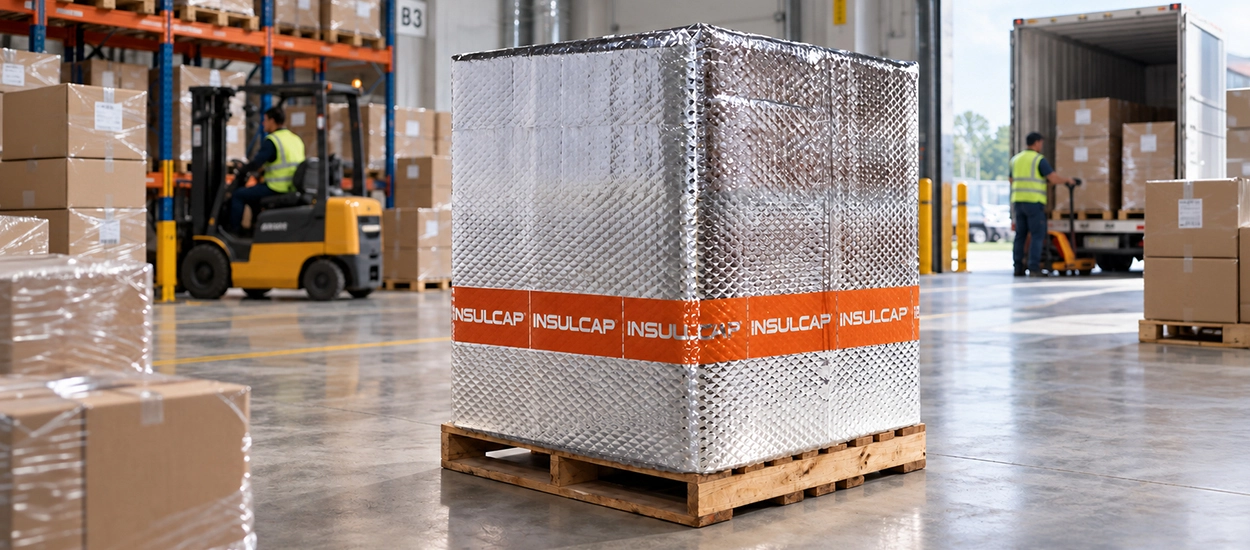
For temperature-sensitive medicines, packaging has to do more than contain a product. It has to support the conditions that the product needs while it moves through storage, handling and transport. That means thinking beyond the box or pallet and looking at the complete journey, including the places where a shipment may leave a controlled environment.
The right pharmaceutical packaging strategy depends on the product, the route, the shipment configuration and the conditions it may encounter along the way. A pallet waiting on an airport tarmac has a different risk profile from a carton moving directly between controlled facilities. The packaging decision needs to reflect that difference.
What is pharmaceutical packaging?
Pharmaceutical packaging covers the systems and materials used to contain, protect, handle and transport medicines. Primary packaging sits in direct contact with the product, secondary packaging groups or protects those primary packs, and tertiary or transport packaging supports storage and distribution. The role of packaging in the pharmaceutical industry supply chains extends well beyond containment, particularly when temperature-sensitive products enter distribution.
Wilpak Group International works within that transport layer, providing thermal protection for temperature-sensitive shipments. For teams comparing pharmaceutical packaging solutions, that transport layer needs to be assessed against the product, shipment and journey.
What changes when a pharmaceutical product is temperature-sensitive?
Temperature-sensitive products need their storage and transport requirements understood before the journey begins. Some medicines require refrigerated conditions, while others travel within controlled room temperature ranges. The required conditions are product-specific, so the packaging and thermal protection strategy should be built around the actual specification rather than a generic assumption about pharmaceutical freight.
The surrounding environment also changes throughout distribution. A shipment can leave a controlled warehouse, cross a loading dock, travel by road, wait at an airport, transfer between handlers and arrive in a very different climate. The packaging of pharmaceutical products needs to account for those transitions as well as the scheduled transport time.
Where can temperature exposure occur during pharmaceutical transport?
Temperature exposure often occurs in the gaps between controlled stages. Warehousing and dispatch are obvious examples. A product may be stored under defined conditions, then moved into a staging area while transport is prepared. Loading and unloading create another transition, particularly where freight is briefly exposed to ambient weather.
Air freight introduces its own sequence of handovers. Freight may move through a terminal, wait on the tarmac, transfer between handlers or sit temporarily while the next stage is arranged. Road transport, customs processes and unplanned delays can extend the time a shipment spends outside its expected conditions. The destination matters too. Protection is still relevant until the freight reaches the environment in which it is meant to be received and stored.
Choosing pharmaceutical packaging around the real journey
Start with the product requirements
The product’s required storage and transport conditions should lead the decision. Before selecting a thermal protection format, the team responsible for the shipment needs to understand the temperature range, sensitivity and any other handling requirements that apply to the product.
Consider duration and realistic delays
Journey duration is more than the time shown on a flight schedule or road plan. Loading, unloading, customs, cross-docking, temporary storage and missed connections can all extend the period during which protection is needed. A sound packaging plan should be based on a realistic journey profile, not the best-case timetable.
Assess the route and external conditions
A shipment moving through northern Europe in winter can face very different ambient conditions from freight crossing a hot US airport in summer. International routes may also move through several climates before reaching their destination. Route planning should therefore consider each environment the shipment is likely to encounter and the points where it may be most exposed.
Match the protection to the shipment configuration
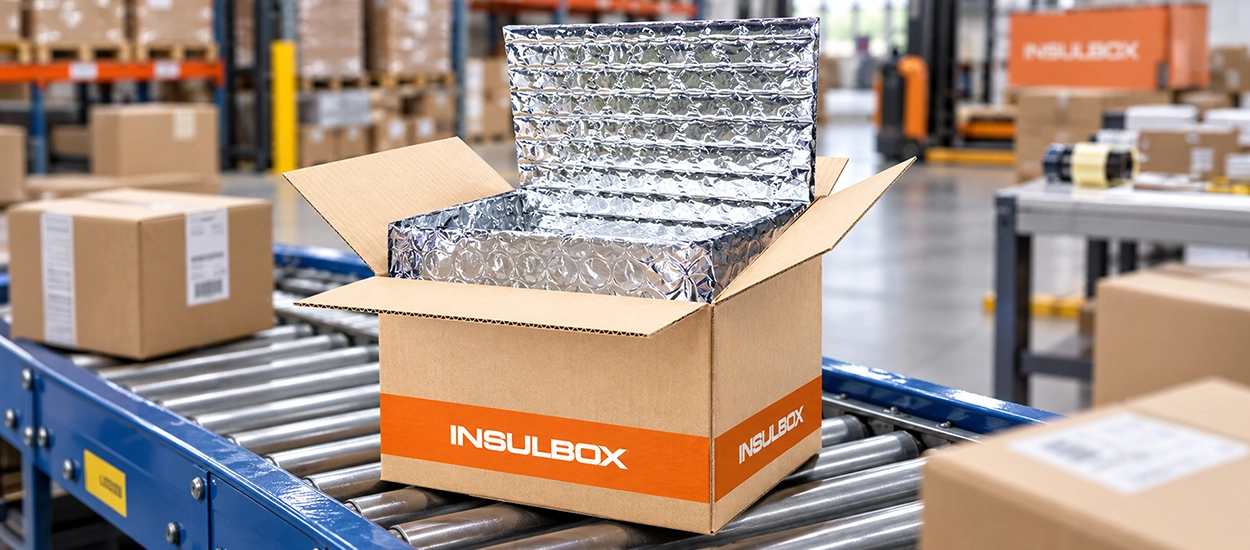
A palletised load and a smaller box-level shipment require different physical solutions. For palletised pharmaceutical freight, InsulCap® provides a recyclable and reusable thermal pallet cover that creates a passive barrier around the load. For suitable smaller configurations, InsulBox® provides a custom thermal protection liner that can be precision cut to suit the box or container.
Neither approach is universally better. The right format depends on the product, load size, route, handling requirements and the wider temperature-control strategy.
Look closely at handover points
Every transfer between a manufacturer, warehouse, freight forwarder, airport, carrier or distribution centre changes the operating environment around the shipment. Mapping those handovers before the freight moves can reveal where additional protection may be useful and where a route needs closer operational control.
The role of thermal protection in pharmaceutical packaging
Passive thermal protection can form one part of a broader strategy for temperature-sensitive distribution. Wilpak’s Insul® Technology uses layered thermal barrier materials to help reduce the effect of radiant, conductive and convective heat transfer on the protected shipment.
That does not mean a passive cover or liner replaces active temperature-controlled transport in every application. Some supply chains rely on active systems throughout. Others use passive thermal protection during vulnerable parts of the journey, such as loading, airport handling, temporary exposure or transfer between controlled environments. The appropriate approach depends on the product and route.
Pallet-level and box-level thermal protection
Within pharmaceuticals packaging, pallet-level protection is useful when the whole load needs a thermal barrier around it. InsulCap® is custom-sized for pallet configurations and is designed for repeated use where the application and condition of the cover allow. Wilpak’s thermal covers are reusable and recyclable, giving businesses the option to consider both reuse and recycling when planning their packaging.
For smaller shipment formats, InsulBox® brings thermal barrier material into a box-liner configuration. Its lightweight, foldable construction can make storage and handling more efficient than bulky rigid systems in appropriate applications. As with any drug packaging or transport protection decision, the final choice should be based on the shipment rather than on a preferred product format.
Plan for temperature-excursion risk before dispatch
Temperature-excursion risk is easier to manage when it is considered before the shipment reaches the loading dock. The team should know the product requirements, understand the intended route, identify likely exposure points and think through what happens if the journey changes. Where qualification or route-specific evidence is required, that should be established as part of the process rather than treated as an afterthought.
Choosing pharmaceutical packaging for the journey ahead
There is no single pharmaceutical packaging approach that suits every temperature-sensitive shipment. The right strategy brings together the product requirements, shipment configuration, route, handling conditions, likely exposure and the evidence needed to support the selected solution.
Wilpak Group International works with pharmaceutical and logistics organisations to develop thermal protection around those real shipment conditions. If you are reviewing a current route or planning a new one, speak with the Wilpak team about the points where your freight is most exposed and the protection options available.
Frequently asked questions
What is pharmaceutical packaging?
Pharmaceutical packaging includes the materials and systems used to contain, protect, store, handle and transport pharmaceutical products. For temperature-sensitive distribution, that can include transport packaging and thermal protection as part of a wider temperature-control strategy.
What packaging is used for temperature-sensitive pharmaceutical products?
The answer depends on the product and shipment. Depending on the requirements, the transport system may include insulated packaging, box-level thermal liners, pallet-level thermal covers and active temperature-controlled systems.
What should be considered when selecting pharmaceutical packaging for transport?
Start with the product’s required conditions, then consider journey duration, route, ambient exposure, shipment configuration, handover points, potential delays and the evidence required to support the selected protection.